

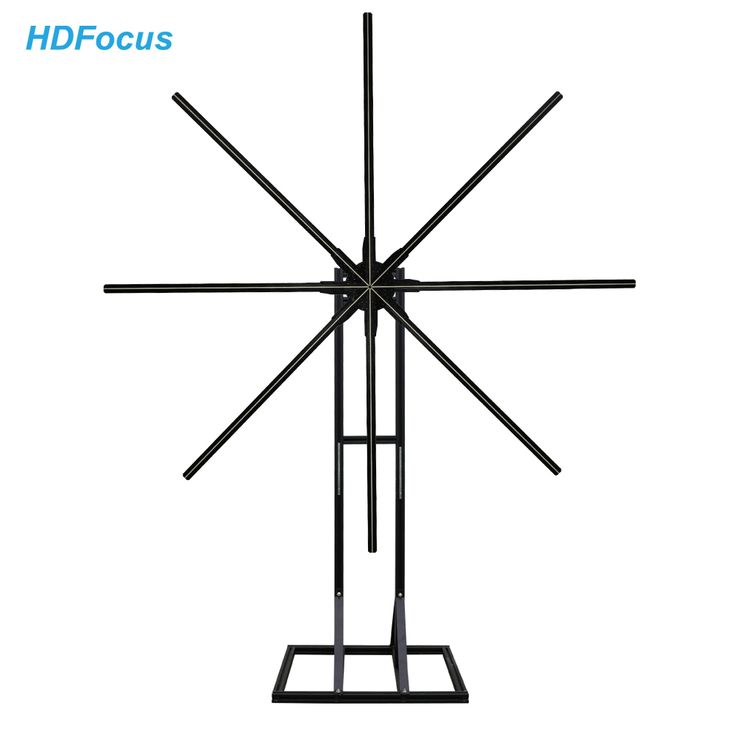
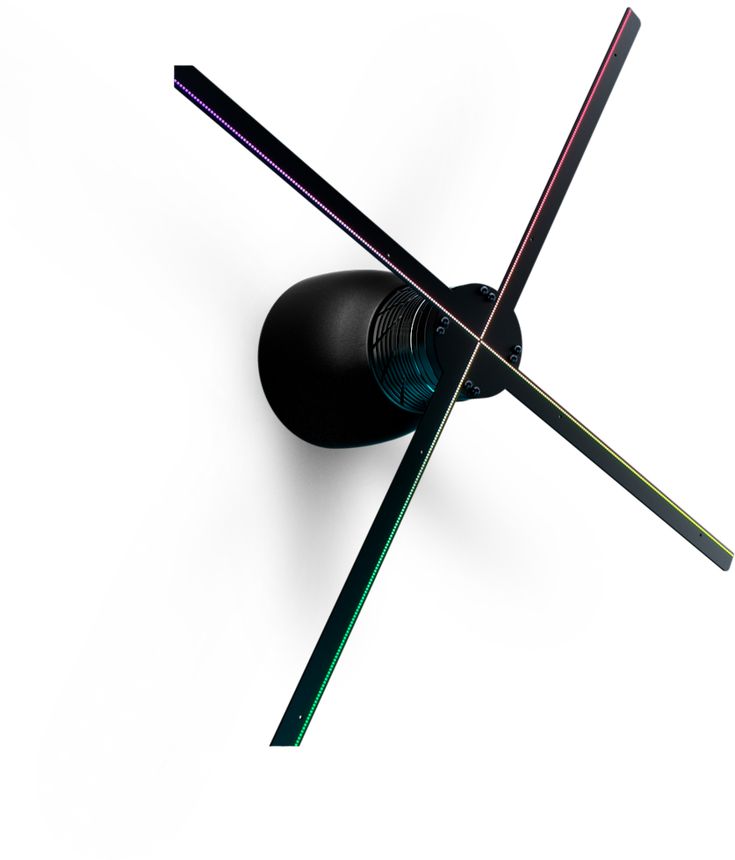
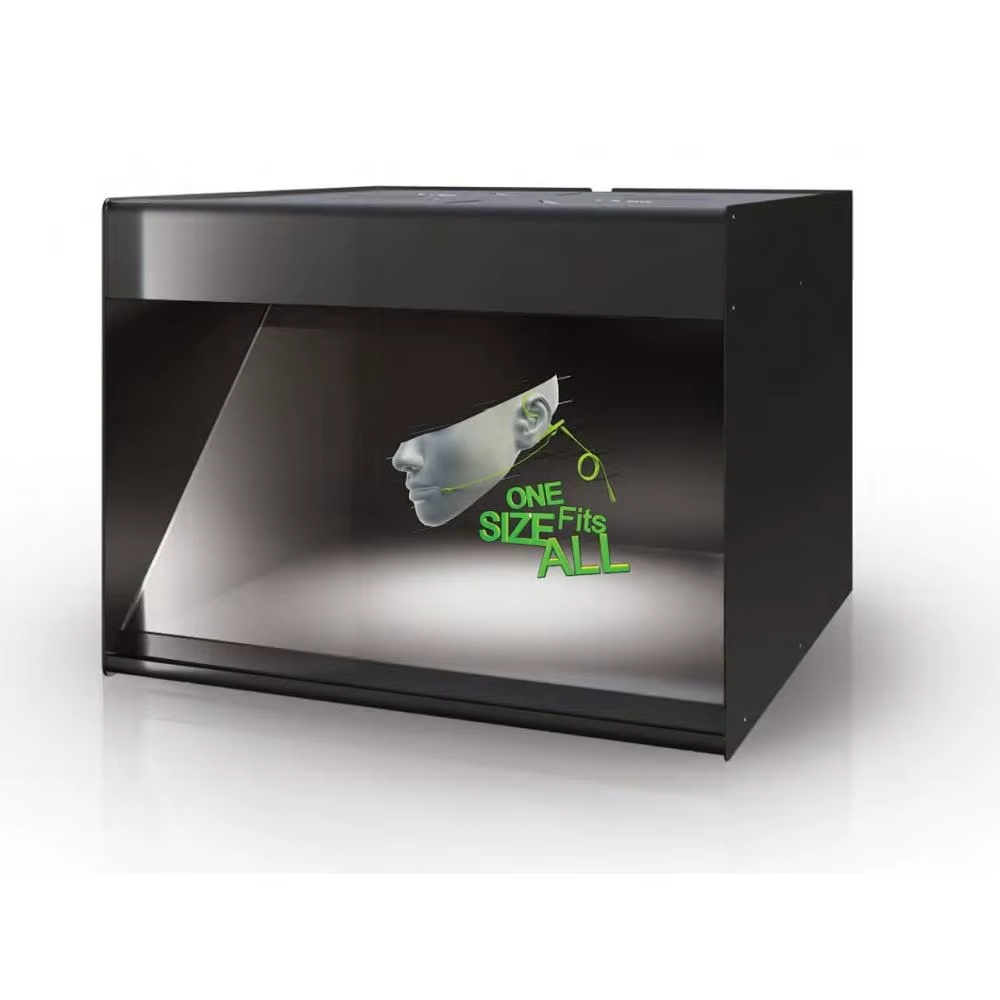

Choosing the right holographic crystalline optic is a strategic decision that can make the difference between an ordinary event and a truly memorable experience. This complete guide walks you through assessing your needs and selecting the most suitable equipment for your project.
Before you start
Take the time to accurately analyze your needs before investing. A well-chosen crystalline optic will serve you for years and guarantee exceptional results.
1. Understanding the different types of crystalline optics
There are three main categories of holographic optics, each with its own characteristics and preferred areas of application.
Direct projection optics
Direct projection systems create holograms by projecting light directly through a specially designed crystalline optic. This method offers exceptional brightness and is particularly suitable for well-lit environments such as trade shows or commercial showcases.
Advantages:
- Maximum brightness even in daylight
- Relatively simple installation
- Moderate acquisition cost
- Low maintenance
Disadvantages:
- Sometimes limited viewing angles
- Requires precise positioning
- Projection size constrained
Reflection optics
Reflection systems use mirrors and crystalline lenses to create holograms by redirecting light. They excel at producing large-scale projections with 360-degree viewing angles.
Advantages:
- 360-degree visibility
- Scalable projection size
- Guaranteed "wow" effect
- Ideal for keynotes and product launches
Disadvantages:
- Higher cost
- More complex installation
- Sensitive to lighting conditions
Advanced hybrid optics
Hybrid systems combine multiple technologies to offer the best of both worlds. They represent the state of the art in holographic technology and are preferred for high-end permanent installations.
2. Essential selection criteria
| Criteria | Importance | Impact on choice |
|---|---|---|
| Available budget | Critical | Determines the category of equipment accessible |
| Projection size | Very high | Directly influences the type of optic required |
| Lighting conditions | High | Determines the required light output |
| Frequency of use | Medium | Orients toward rental or purchase |
| Portability | Variable | Important for traveling events |
3. Evaluate your usage context
For one-off events
If you organize occasional events (product launches, trade shows, conferences), rental is often the best option. You benefit from the latest generation equipment without a large initial investment, while having access to the supplier’s technical support.
Beware of lead times
Book your equipment at least 2-3 months in advance for high-demand periods (September–December). The best systems are often reserved well in advance.
For permanent installations
Companies with permanent exhibition spaces, showrooms, or museums should invest in their own equipment. Payback usually occurs within 3 to 5 years, and you gain total flexibility to create and modify content.
4. Technical specifications to consider
Resolution and image quality
Resolution determines the sharpness and level of detail of your holograms. For professional applications, aim for a minimum resolution of 1920×1080 (Full HD). High-end systems now offer 4K (3840×2160) for crystal-clear image quality.
Brightness and contrast
Measured in lumens, brightness must match your environment:
- Dim ambiance: 2000–3000 lumens sufficient
- Normal lighting: 3000–5000 lumens recommended
- Daylight/outdoor: 5000+ lumens required
Viewing angles
The optimal viewing angle varies by projection type. For spaces where visitors move around, prefer a wide viewing angle (minimum 160°) or a 360° system. For classic frontal presentations, 120° is usually sufficient.
5. Final decision checklist
Before finalizing your choice
- I have clearly defined my total budget (purchase + installation + maintenance)
- I have measured the available space and checked technical constraints
- I have assessed the lighting conditions of the installation location
- I have requested demonstrations from several suppliers
- I have checked warranty and technical support conditions
- I have anticipated future upgrade and scalability needs
- I have reviewed feedback from similar users
- I have established a realistic timeline for installation and training
6. Questions to ask suppliers
When speaking with holographic equipment suppliers, don’t hesitate to ask these essential questions:
- What is the average lifespan of the crystalline optic? The best systems offer at least 20,000 hours.
- What is the lead time and cost for replacing critical components?
- Do you provide full user training?
- What is your response time in case of failure?
- Are software updates included?
- Can I test the equipment before purchase?
- What are your client references in my industry?
7. Common mistakes to avoid
Underestimating brightness requirements
The most frequent mistake is choosing a system that is not bright enough. A pale, hard-to-see hologram will ruin your investment. Always plan a 20–30% safety margin above the minimum recommendations.
Neglecting acoustics and environment
A spectacular hologram loses impact in a noisy or poorly laid-out space. Think holistically about the user experience: ambient lighting, sound, visitor flow, etc.
Forgetting scalability
Holographic technology evolves rapidly. Make sure your system can receive updates and adopt new features without requiring complete replacement.
Conclusion
Choosing a holographic crystalline optic is a significant investment that deserves careful thought. By following this guide and taking the time to accurately assess your needs, you will maximize your chances of selecting the perfect equipment for your projects.
Remember that the best equipment is not necessarily the most expensive or sophisticated, but the one that exactly matches your specific needs and usage context. Take the time to compare, test, and get support from experts in the field.
"The success of a holographic installation depends 70% on the initial equipment choice and 30% on content quality. Invest time in this selection phase—you won’t regret it." — Marie Leclerc, Immersive Technologies Consultant
