

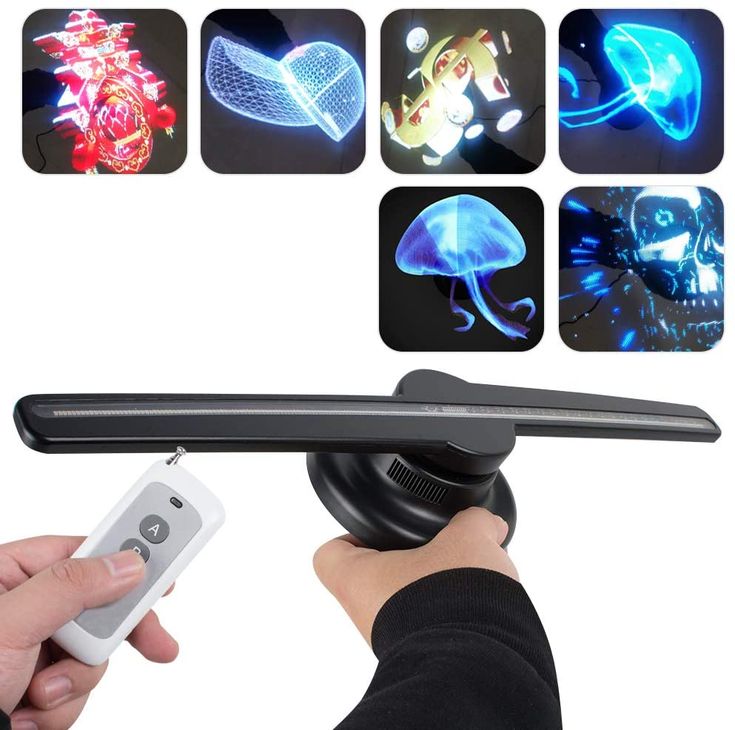
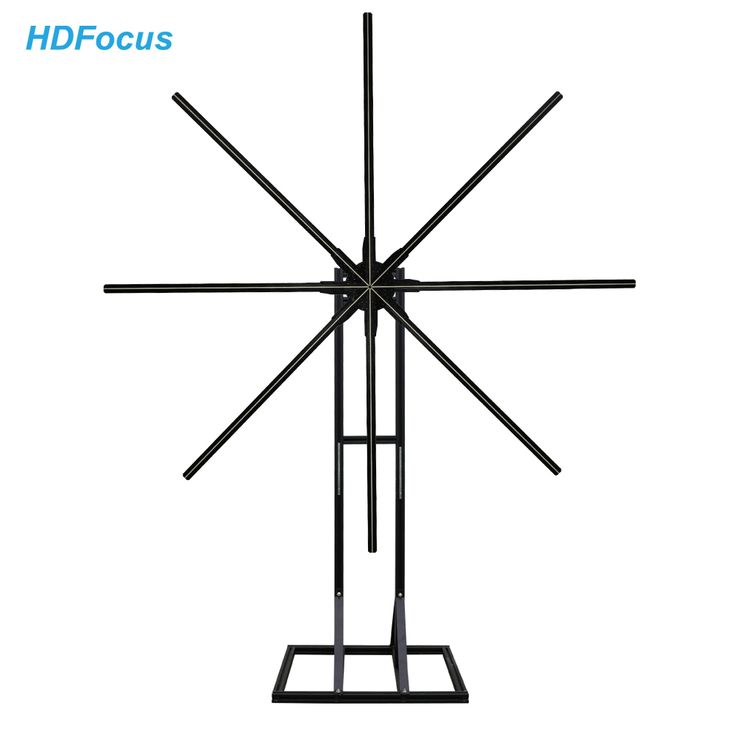
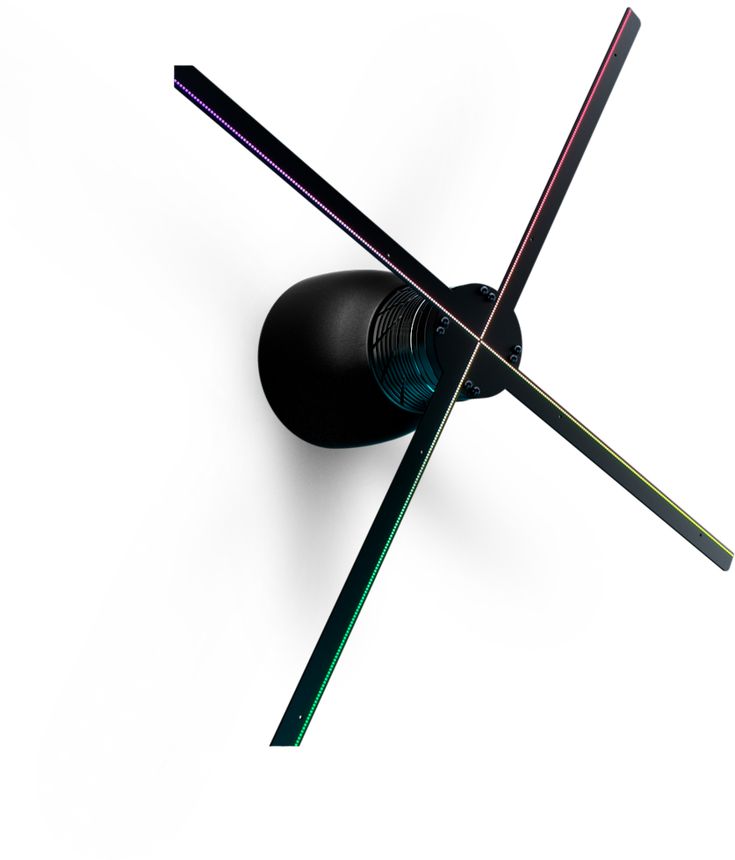
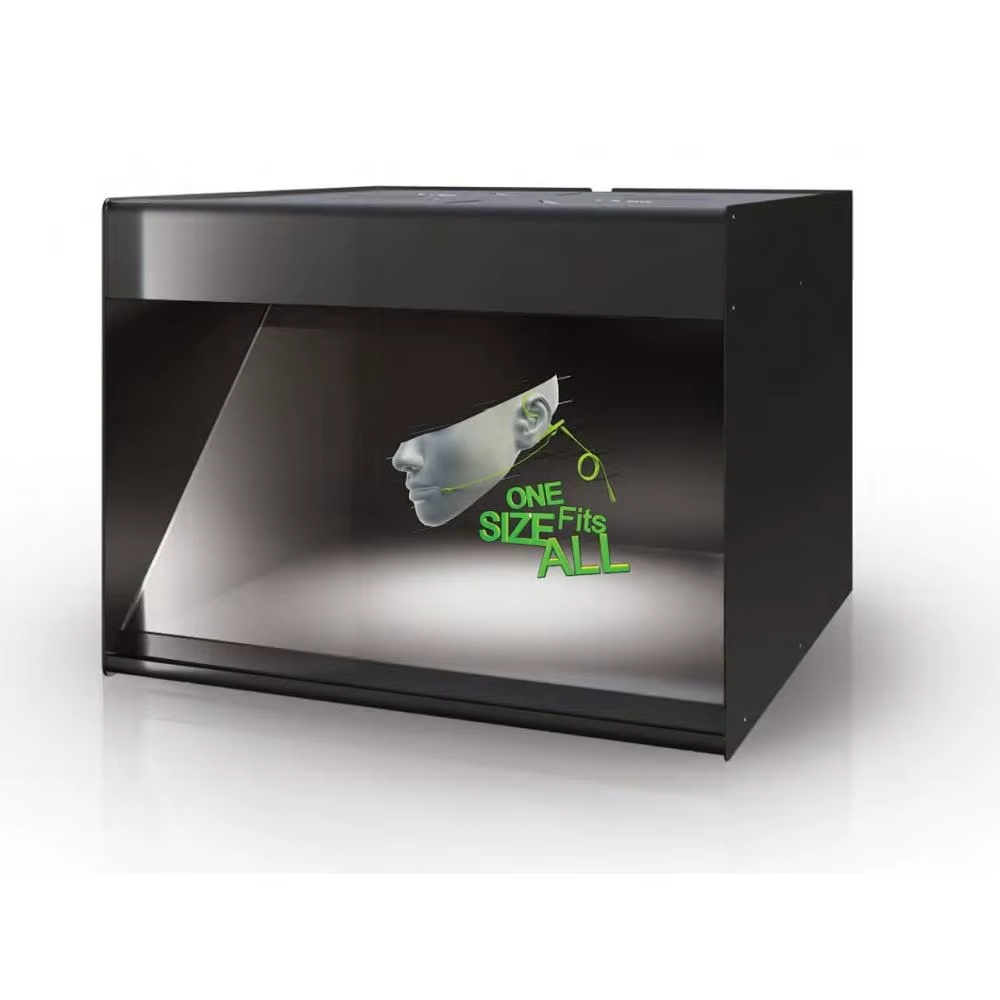
In 2026, the retail landscape is undergoing a dramatic visual transformation, led by one of the most accessible yet striking holographic technologies: LED holographic fans (also known as 3D propeller displays or holographic LED fans). These compact devices use rapidly spinning LED blades and persistence of vision to project floating, three-dimensional animations and products that appear to hover in mid-air—no glasses, no screens, no complicated setups required.
Once considered a novelty, LED holographic fans have evolved into a mainstream marketing tool. Retailers, brands, and pop-up experiences are adopting them at scale to cut through visual clutter, boost dwell time, and drive foot traffic in an era where consumer attention is harder to capture than ever.
Why LED Holographic Fans Are Dominating Retail in 2026
Traditional digital signage and static displays are losing their edge in saturated environments like malls, flagship stores, and high-street shops. LED holographic fans offer a compelling alternative: true 360-degree visibility, eye-catching motion, and a futuristic "wow" factor that stops passersby in their tracks.
Key Statistic 2026
Retail activations using holographic fans have shown up to 40% longer viewing times and significantly higher engagement compared to standard 2D digital signage, according to industry case studies and third-party measurements.
How the Technology Actually Works
At its core, an LED holographic fan relies on a simple yet powerful principle: persistence of vision. High-speed rotating blades fitted with precisely timed RGB LEDs create the illusion of a solid, floating 3D image. Modern units feature Wi-Fi/app control, high-resolution content libraries (often 1000+ pre-made videos), synchronization for multi-fan arrays, and even Bluetooth audio sync for immersive experiences.
Key Advantages Over Traditional Displays
- 360° Visibility: The floating effect works from virtually any angle, perfect for open retail spaces and window displays.
- Low Power & Portable: Many models consume under 100W and weigh just a few kilograms, making them easy to install, move, or ceiling-mount.
- Cost-Effective Wow Factor: Entry-level professional units start far below large-scale projection systems, with quick ROI through increased foot traffic and sales lift.
- Day & Night Performance: High-brightness LEDs perform well in varied lighting; optional black background panels boost daytime contrast.
- Easy Content Management: Upload custom animations via mobile app—logos, product spins, seasonal promotions—in minutes.
Real-World Retail Applications Thriving in 2026
1. Storefront & Window Magic
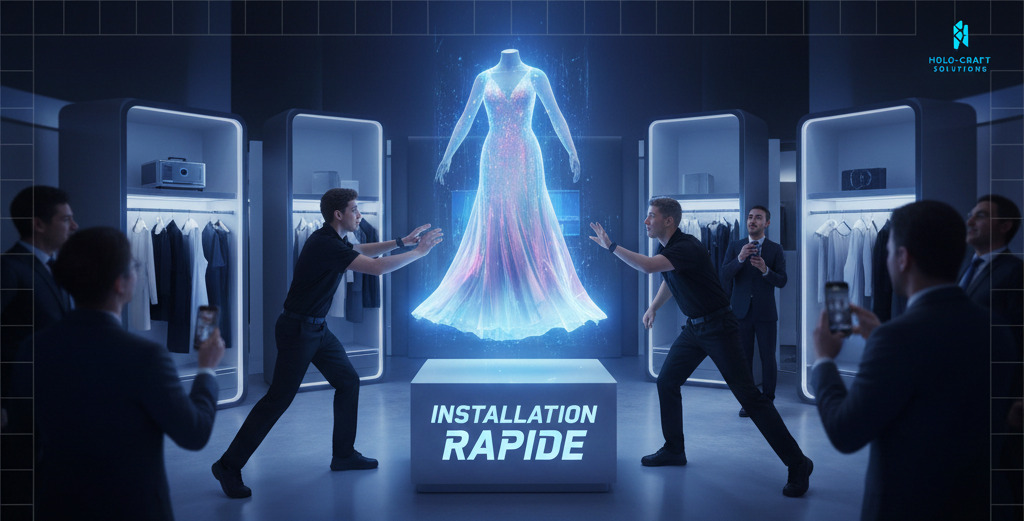
Fashion, cosmetics, and electronics retailers use ceiling or wall-mounted fans to showcase rotating 3D products that seem to float just inside the glass. This draws crowds and turns window shoppers into in-store visitors.
2. Point-of-Sale & Shelf Enhancements
Smaller 40–65 cm fans sit on counters or shelves, animating premium items like watches, perfumes, or smartphones in lifelike 3D—encouraging impulse buys and longer engagement.
"Since installing LED holographic fans at our entrances and key aisles, we've seen measurable increases in dwell time and a noticeable uptick in conversions. It's one of the highest-ROI visual upgrades we've made in years." — Retail Innovation Director, Major Fashion Chain (2026 case study)
3. Pop-Ups, Events & Temporary Activations
Brands deploy portable fans for limited-time experiences, trade shows, and mall kiosks. Multiple synchronized units create massive floating displays that dominate the space without heavy infrastructure.
Measurable Business Impact & ROI
Early adopters report strong returns: increased brand recall, higher emotional connection, and direct sales lifts. Studies and field data show holographic elements can quadruple interest in featured products and deliver engagement rates far above static or even standard video signage.
Conclusion
LED holographic fans are no longer a futuristic gimmick—they are a proven, high-impact visual merchandising tool reshaping retail in 2026. Brands that embrace them early gain a memorable edge in a crowded market, turning ordinary shopping moments into extraordinary brand experiences.
As the technology matures and costs continue to drop, expect to see these floating 3D displays become as common in stores as LED video walls were a decade ago. The future of retail isn't flat—it's floating in mid-air.